
Start here Grade Explorer What we do Product Index Research Independence / search C compare Esc close
Public-interest privacy research

Privacy is a promise until someone tests it.

The Freedom Institute grades how countries censor, measures what privacy products actually do with your data, and publishes the evidence behind every score. We build the testing tools in the open so anyone can repeat the work.

First edition The Privacy Product Index opens for public methodology review Sep 2026
What we are for

If you can be identified, you can be targeted; most people have no way to find out which tools actually stop that.

A VPN provider represents that it retains no logs, a messaging platform represents that its users cannot be identified, and a cloud service represents that deleted data has been deleted. Each of these is a representation made by the party holding the commercial interest in it being believed, and almost none of them arrive with evidence that a reader can verify independently. The same gap runs through state conduct: a government restricts a protocol on a Tuesday and restores it on a Friday, and the record of what happened has usually disappeared before anyone documents it.

We publish country censorship grades and a Privacy Product Index that separate what a provider says from what we observed, what an auditor confirmed, and what nobody knows yet. The unknowns get printed too.

  • 01Advance privacy, freedom of expression, and access to information through evidence, technology, and advocacy.
  • 02Serve the people choosing privacy tools, the journalists who depend on them, and the civil-society groups working under pressure.
  • 03Hand policymakers and product teams recommendations specific enough to act on.
Who this is for

Three readers decide whether this work was worth doing

Research that nobody can act on is a publication, not a public good. Every grade and every index entry is written so that these three can make a decision with it.

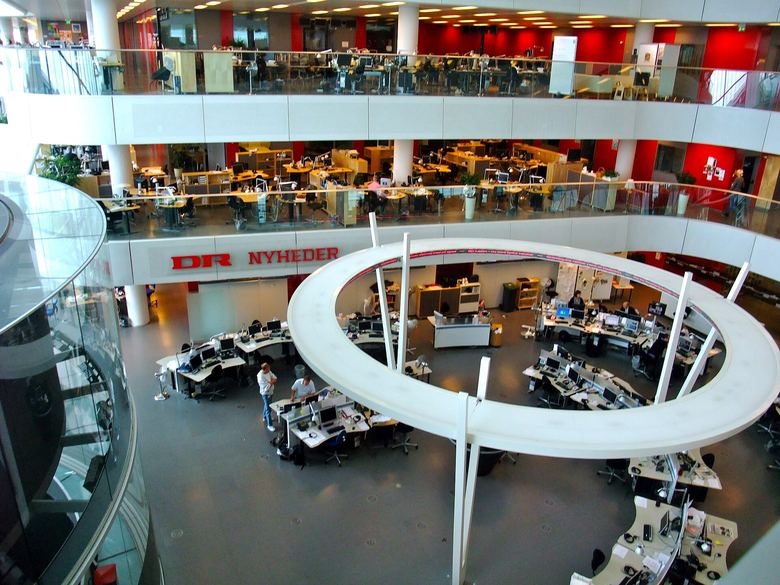
Television newsroom floor seen from above
James Cridland · CC BY 2.0

Journalists and researchers

They need to know what a device gives up when it is inspected and what a provider hands over when it is asked, before the trip rather than after it.

Public library reading room under a glass dome
Ridiculopathy · CC0

Organisers and civil society

They coordinate in real time under conditions where group membership is the sensitive fact and the connection itself may be the evidence against them.

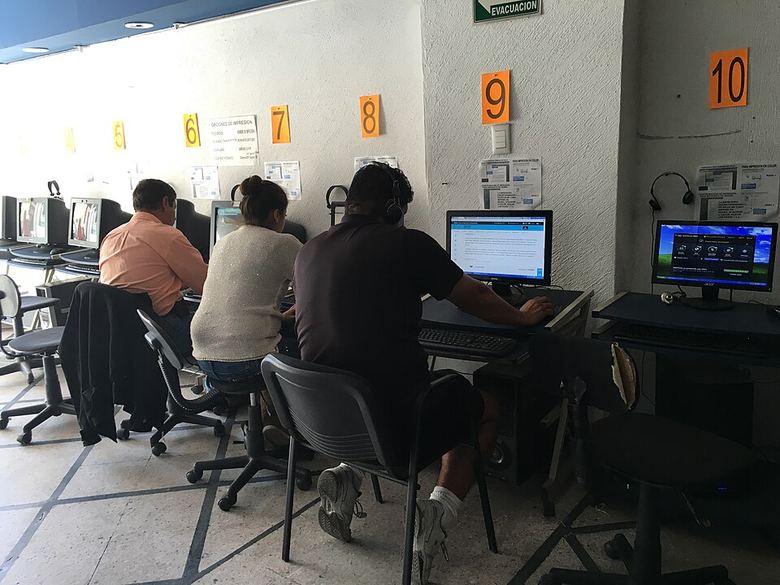
People using terminals at a public internet cafe
ARipstra (WMF) · CC BY-SA 4.0

Households making an ordinary choice

They are picking between two services on a Sunday afternoon and deserve a straight answer on which one collects less, keeps it for a shorter time, and lets them take it back.

Coverage at first publication

Every grade ships with its evidence trail

Illustrative · pre-launch concept
Countries graded
0
▲ +12 since prior cycle
Products indexed
0
▲ +31 since prior cycle
Evidence records
0
▲ +2,900 last 90 days
Shutdown events
0
▼ 41 still unresolved
Open-source tests
0
Diagnostics published under MIT
Start here

Your threat model decides which questions matter

Advice that ignores who is looking for you is guesswork. Pick the situation closest to yours and the country tier you operate in; the panel rewrites the order of what to check first.

01 / Who is likely looking
02 / Where you operate
What to verify, in order
Elevated exposure

    Guidance shape only. The published version links each item to the test that produced it.

    Country censorship grades

    A grade is worthless unless you can see what it was built from

    Each country is scored on four axes. Move the weights and every grade in the table recomputes, because a scoring choice is an argument and you should be able to test ours. Open any row for the axis detail, the shutdown history, and the evidence log behind it.

    Freedom Grade Explorer
    # Country Grade Blocking Shutdowns 12M Trend Circumvention Evidence Confidence
    Showing 18 of 18 Sample rendering. Figures are illustrative and are not a published assessment.

    People choose the tools that guard their lives on the strength of a slogan

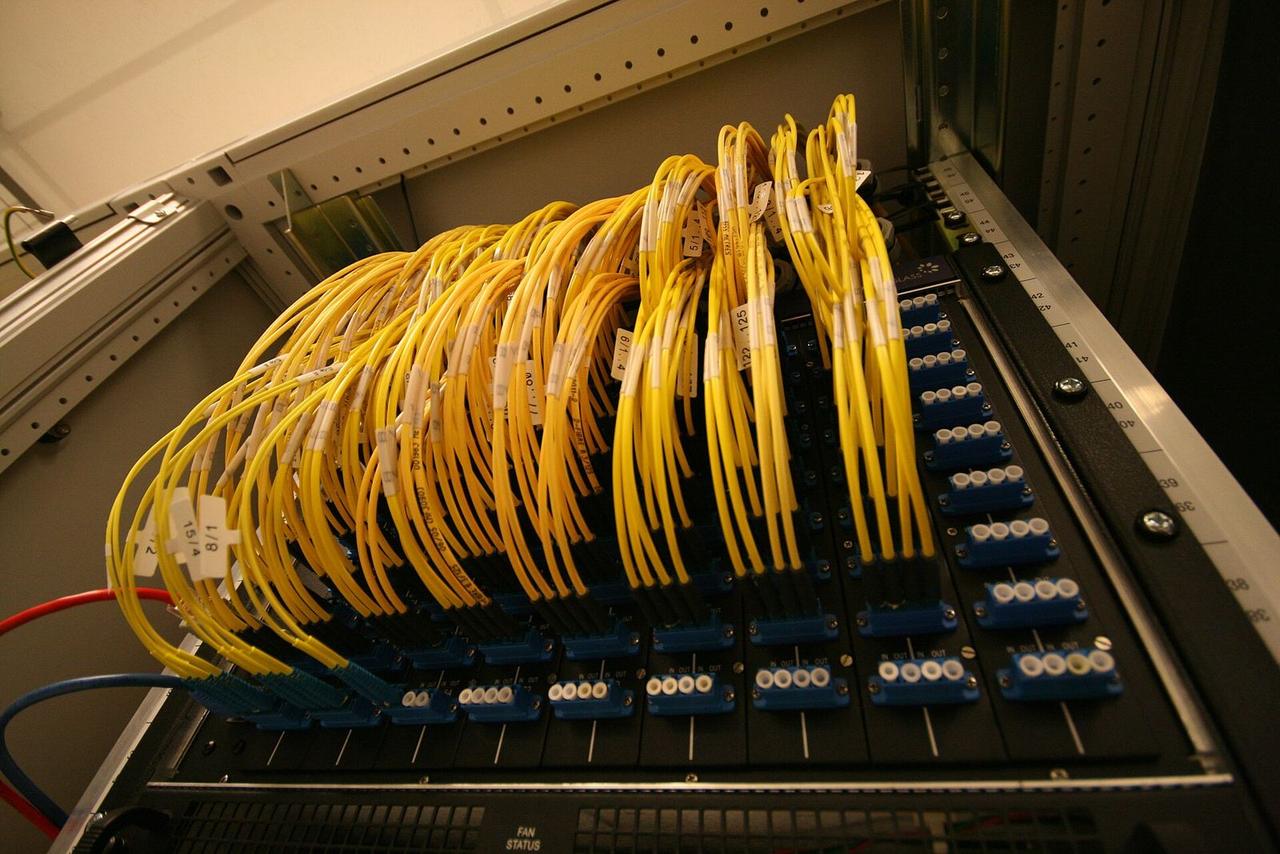
    Optical fibre patch panel at an internet exchange
    Fabienne Serriere · CC BY-SA 3.0

    No-logs is a marketing line until someone runs the test

    Providers write their own privacy claims and grade their own homework. Independent verification is rare, expensive, and almost never repeated after launch, so a claim that was true at audit can quietly stop being true and nobody finds out.

    Shutdowns end before the record of them begins

    A throttle lasts six hours; a block on one protocol lasts a weekend. By the time a report is written the traffic has recovered and the evidence is gone. Without continuous measurement, the worst behaviour is the behaviour that leaves no trace.

    The people most at risk get the least usable guidance

    A journalist in Tehran, an organiser in Yangon, and a researcher in Minsk all need the same thing: which of these five tools will not give me up, and how do you know. The honest answer today is usually a forum thread and a review paid for by affiliate revenue.

    Core activities

    Three products, one rule: show the evidence or mark it unknown

    01 / Measure freedom

    Grades carry their dates, their coverage, and their confidence

    Country scores cover blocking, shutdowns, restrictions on circumvention, and punishment for online expression. Where our coverage is thin, the confidence bar says so rather than rounding the gap into a number.

    • Continuous network measurement
    • Event log with sources and timestamps
    • Quarterly re-grade, public changelog
    02 / Evaluate products

    Provider claims and observed behaviour are scored separately

    The Privacy Product Index compares tools inside a category on data collection, retention, provider access, tracking, privacy defaults, and user control; each cell is labelled claimed, observed, audited, or unknown.

    • Category-relative scoring
    • Traffic and binary analysis
    • No paid placement, no affiliate links
    03 / Build and advocate

    Open tools let anyone repeat the measurement

    We ship the diagnostics we test with, work with product teams on the fixes our testing surfaces, and turn findings into guidance people can act on and briefings regulators can use.

    • Open-source testing harness
    • Coordinated disclosure to vendors
    • Plain-language buyer guidance
    Privacy Product Index
    Tick up to three rows to compare them side by side
    Entry Category Composite Data collected Retention Provider access Third-party tracking Verification
    Showing 12 of 12 Entries are anonymised until first publication. Structure shown; scores are illustrative.
    Funding and credibility

    Our largest funder does not get a soft review; we wrote that into the structure before we wrote a word of research.

    UR would be the Institute's primary supporter and its founding organiser, with funding and in-kind contributions disclosed in full. That relationship creates the obvious conflict, because UR builds the category of product the Institute exists to assess. Independence that depends on goodwill is not independence, so control of methodology and publication sits with a majority-independent board and autonomous research leadership, and any assessment touching UR or anything the Institute builds is led by external reviewers.

    Disclosure

    Every funder, grant, and in-kind contribution published with amounts and dates.

    Control

    Majority-independent board; research leadership holds final say on what publishes.

    Conflicts

    External reviewers lead any assessment touching a funder or an Institute product.

    No paid rankings

    No sponsored placement, no affiliate revenue, no sponsor veto over a finding.

    The organiser

    UR builds the products; the Institute is the check on them

    UR is a global institute for privacy and encryption products. Its network is contributed rather than rented: more than 80,000 members supply bandwidth that anonymises traffic for people who cannot route around their own government. UR would organise and fund the Freedom Institute, and would also sit inside its scope of assessment.

    URnetwork Organiser and primary supporter
    ur.xyz
    Satellite composite of the Earth
    NASA images by Reto Stöckli · Public domain

    A contributed network changes who holds the risk

    Commercial privacy infrastructure concentrates trust in one operator and one jurisdiction; a member-contributed network spreads it across the people using it. That design is the reason UR can serve places where a single corporate exit node would be blocked or seized within a week, and it is also the reason UR's own claims need testing by someone who does not report to UR.

    The Institute publishes the test results either way. A finding against UR is the proof that the structure works.

    80k+
    Contributing members
    Contributed
    Bandwidth model
    Full
    Funding disclosure
    Prior art we build on

    Six organisations already solved parts of this; we are not starting from zero

    Freedom House

    Annual internet-freedom country ratings with supporting narratives.

    Freedom on the Net
    OONI

    Open-source censorship measurement, open data, and investigations.

    ooni.org
    Access Now

    Shutdown documentation joined to advocacy through local partners.

    KeepItOn
    Ranking Digital Rights

    Structured review of corporate disclosures on privacy and expression.

    Research process
    Mozilla

    Consumer-facing warnings on connected products and apps.

    Privacy Not Included
    Privacy Guides

    Criteria-based recommendations with rules against provider influence.

    privacyguides.org
    Photography

    Every image here is licensed, and the licence is printed

    An organisation that asks providers to show their evidence should show its own. All photography is sourced from Wikimedia Commons under public domain, CC0, or Creative Commons Attribution terms, resized but not otherwise altered, and credited below and on hover.

    URnetwork wordmark
    UR · Supplied by the organiser · ur.xyz
    The newsroom at DR
    James Cridland · CC BY 2.0 · Wikimedia Commons
    People studying in the Wolfson Reading Room of Manchester Cent
    Ridiculopathy · CC0 · Wikimedia Commons
    AMS-IX optical patch panel
    Fabienne Serriere · CC BY-SA 3.0 · Wikimedia Commons
    Blue Marble Western Hemisphere
    NASA / Reto Stöckli, based on data from NASA and NOAA · Public domain · Wikimedia Commons
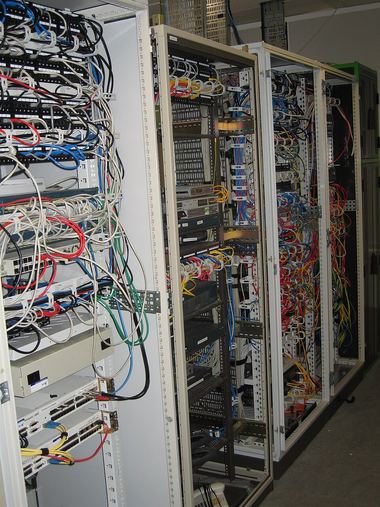
    Routers and switch racks - IMG 1678
    Jemimus · CC BY 2.0 · Wikimedia Commons
    Photograph of Storage Boxes, Used in National Archives Stack A
    General Services Administration. National Archives and Records Service · Public domain · Wikimedia Commons
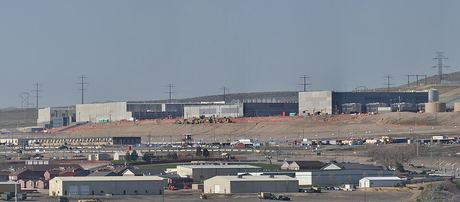
    Utah Data Center Panorama (cropped)
    Swilsonmc · CC BY-SA 3.0 · Wikimedia Commons
    Internet Cafe, Apizaco, Mexico
    ARipstra (WMF) · CC BY-SA 4.0 · Wikimedia Commons
    Billa supermarket, Blagoevgrad centre, self-checkout, 2026
    Bdx · CC0 · Wikimedia Commons
    Compare